E-bike batteries are one of the most expensive components on an electric bicycle, so it’s no surprise that riders want them to last as long as possible. The good news is that many batteries can be reconditioned or revived—especially if they’ve been neglected, stored improperly, or left unused for long periods.
This guide explains how most e-bike batteries work, how to safely recondition them, and what to realistically expect in terms of lifespan.
Most E-Bikes Use Lithium-Ion Batteries

The vast majority of modern e-bikes use lithium-ion (Li-ion) batteries. They’re lightweight, energy-dense, and capable of delivering high current—perfect for electric motors.
Common e-bike battery voltages include:
- 36V (very common)
- 48V (very common)
- 24V (older or lower-power systems)
- 72V (high-performance or custom builds)
Each battery pack is made up of many smaller cells wired together. Over time, these cells naturally degrade, but proper care and occasional reconditioning can slow that process significantly.
Understanding Nominal Voltage and Charging
When a battery is labeled as 36V or 48V, that number refers to its nominal voltage, not the maximum charge.
For example:
- A 36V battery charges up to about 42V
- A 48V battery charges up to about 54V
This is why a 48V charger typically outputs around 54 volts—it’s designed to fully charge the battery to its maximum safe level.
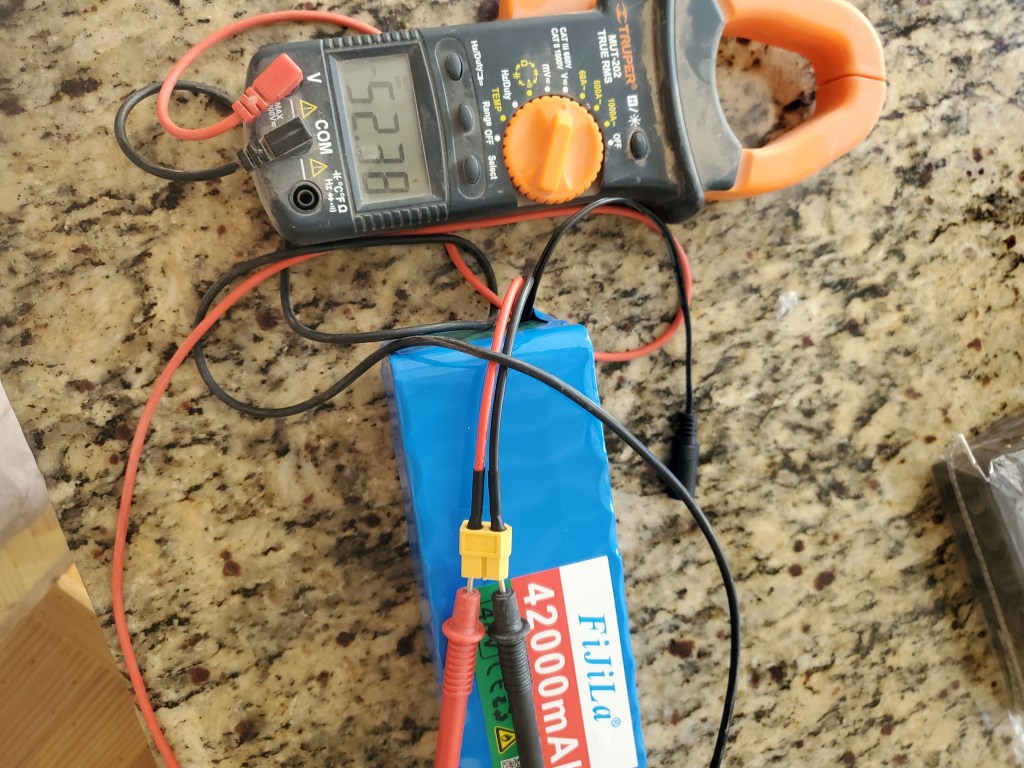
On the low end:
- A low charge on a 48V battery might be anything below 48V
- A very low or critical level might be 45V or lower
Letting a battery stay at very low voltage for long periods can cause problems.
When a Battery “Goes to Sleep”
Lithium-ion batteries include a Battery Management System (BMS) that protects the cells. If voltage drops too low, the BMS may shut the battery down completely. This is often referred to as the battery “going to sleep.”
This can happen if:
- The battery is stored empty
- The bike isn’t used for months
- The battery self-discharges below the safe threshold
In many cases, the battery isn’t dead—it just needs to be woken up.
Waking Up a Sleeping Battery
A battery can sometimes be revived by:
- Applying a gentle charge that raises the voltage above the BMS wake-up point
- Once the battery passes that threshold, the BMS allows normal charging again
Warning: This should be done carefully. Using the correct charger and monitoring voltage is critical. If the battery does not respond or heats up, stop immediately.
How to Recondition a Lithium-Ion E-Bike Battery
Reconditioning doesn’t mean making a battery “like new,” but it can improve performance and restore usable capacity.
Step-by-Step Reconditioning Process
- Inspect the Battery
- Check for swelling, corrosion, cracks, or water damage
- If you see physical damage, do not attempt reconditioning
- Measure Voltage
- Use a multimeter or display (if available)
- Confirm whether the battery is within a recoverable range
- Slow, Full Charge
- Use the correct charger for the battery voltage
- Allow the battery to charge fully (e.g., up to 54V for a 48V battery)
- Controlled Discharge
- Ride the bike normally until the battery reaches a low—but not empty—level
- Avoid pushing it to complete shutdown
- Repeat the Cycle
- Performing 2–3 full charge/discharge cycles can help rebalance cells
- This allows the BMS to recalibrate and can restore range
- Return to Partial Charging
- After reconditioning, avoid constant 100% charging unless needed
Removable vs Built-In Batteries
Removable Batteries
- Easier to recondition and test
- Can be charged indoors at stable temperatures
- Easier to store at optimal charge levels
Built-In Batteries
- Harder to access and measure
- Reconditioning often requires the bike to be present
- Storage and temperature control can be more challenging
Both types use lithium-ion chemistry, but removable batteries generally last longer due to better care and storage options.
How Many Charge Cycles Does an E-Bike Battery Last?
Most lithium-ion e-bike batteries are rated for:
- 500 to 1,000 full charge cycles
A “cycle” means using roughly 100% of the battery’s capacity, not just plugging it in once.
In real-world use:
- Partial charges count as fractions of a cycle
- Gentle riding and partial charging can significantly extend lifespan
How Long Does an E-Bike Battery Last in Years?
With average use:
- 3 to 5 years is typical
- Well-maintained batteries can last 6–8 years
- Poorly maintained batteries may fail in 2–3 years
Factors That Affect Battery Lifespan
- Charging to 100% every day
- Frequently running the battery to empty
- High heat or freezing temperatures
- Long-term storage at very low or very high charge
Best Habits to Extend Battery Life
- Store batteries at 40–70% charge when not in use
- Avoid leaving the battery fully empty
- Don’t store at 100% for weeks at a time
- Charge in moderate temperatures
- Use the correct charger for your battery voltage
Final Thoughts
E-bike batteries are consumable, but they don’t have to be disposable. Understanding voltage, charging behavior, and proper storage can dramatically extend their life. In many cases, a battery that seems “dead” simply needs to be reconditioned or woken up safely.
With good habits and occasional maintenance, you can get more years, more cycles, and more rides out of your e-bike battery.

Leave a comment